

Handling the Undead Book vs Movie

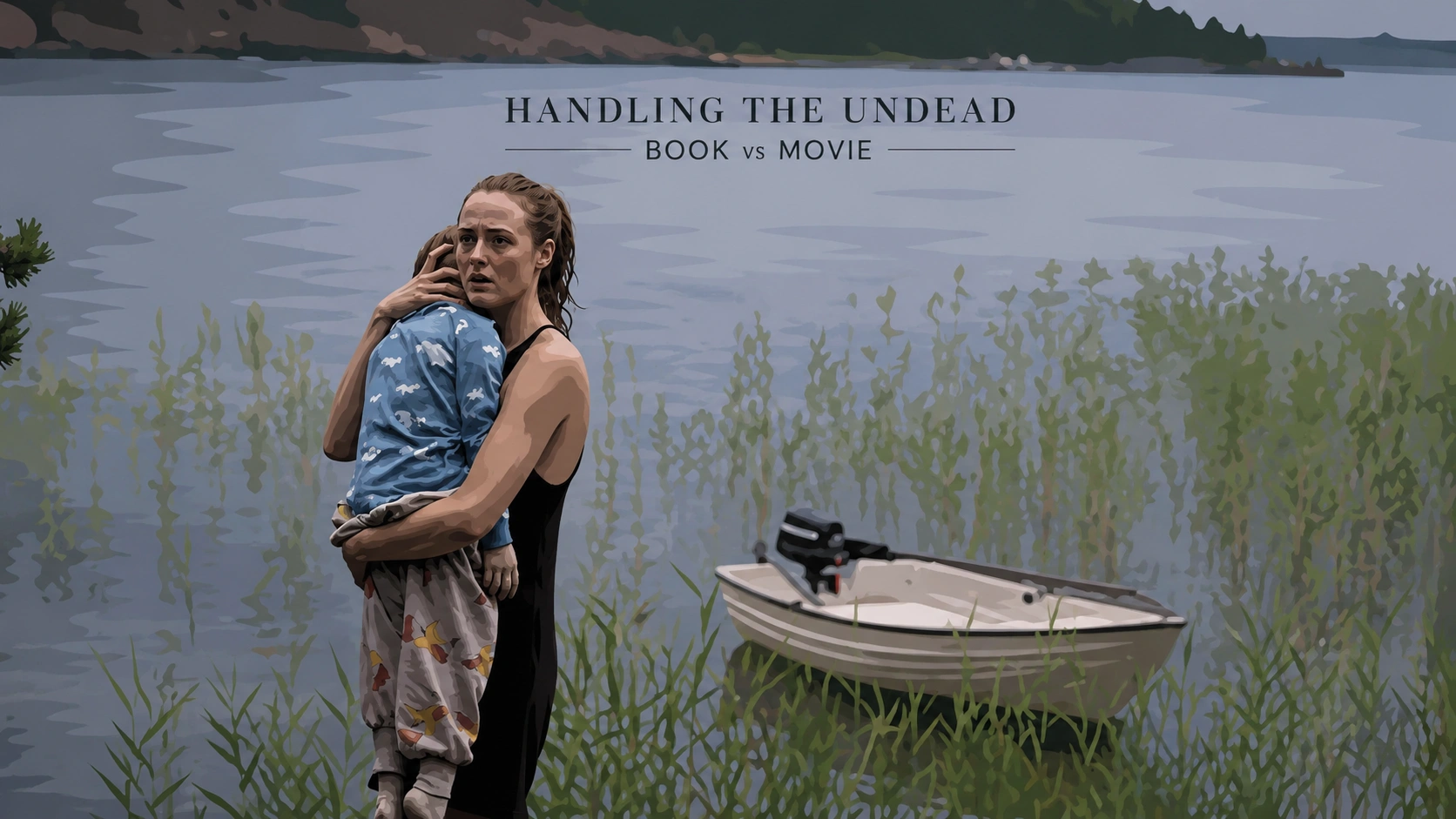
Most zombie stories focus on survival, violence, panic, and action scenes. The story of Handling the Undead takes a very different path. Instead of turning undead characters into fast-moving monsters, the story focuses on grief, emotional pain, family trauma, and the uncomfortable feeling of seeing the dead return without truly coming back.
Why This Story Feels Different From Typical Zombie Fiction
The book and the movie both present the undead in a quiet and disturbing way. The fear does not mainly come from attacks or bloodshed. The fear comes from sadness, confusion, silence, and emotional pressure.
This is one of the biggest reasons why many readers and viewers react strongly to the story. Some people love its slow emotional style, while others expect a traditional horror experience and feel disappointed.
The book written by entity[“book”,”Handling the Undead”,”Novel by John Ajvide Lindqvist”] and the movie adaptation entity[“movie”,”Handling the Undead”,”2024 Norwegian horror drama film”] both tell a story about dead people returning to life in a strange and emotionally painful way. However, the two versions do not present the same experience.
The novel spends more time inside the thoughts of the characters. The movie uses silence, facial expressions, lighting, and atmosphere instead.
Here is a simple comparison showing the general difference between the two versions:
| Element | Book Version | Movie Version |
|---|---|---|
| Main Strength | Internal emotions and psychology | Visual atmosphere and silence |
| Pacing | Slow but detailed | Extremely slow and minimal |
| Horror Style | Emotional and psychological | Visual discomfort and sadness |
| Character Depth | Much deeper background | More limited due to runtime |
| Dialogue | Rich inner thoughts | Sparse conversations |
| Ending Feel | More reflective | More ambiguous |
| Tone | Heavy emotional realism | Cold and haunting |
One important detail many people miss is that the story is not truly about zombies. It is mainly about people who cannot accept death.
The undead become symbols.
They represent:
- Unfinished grief
- Emotional denial
- Family guilt
- Loneliness
- Fear of letting go
- Emotional paralysis
That emotional layer separates this story from mainstream undead fiction.
The Original Novel Builds Emotional Weight Slowly
The novel spends a large amount of time developing the emotional lives of the characters before the undead return fully changes everything.
Readers spend time understanding:
- Family relationships
- Emotional trauma
- Loneliness
- Social isolation
- Regret
- Personal failures
This approach creates emotional investment.
When the dead return, the event feels deeply uncomfortable because the reader already understands the emotional wounds carried by the surviving characters.
The novel creates horror through emotional realism instead of shock scenes.
For example, many zombie stories ask:
- How do humans survive?
- How dangerous are the undead?
- Can society recover?
Handling the Undead asks different questions:
| Emotional Question | Meaning |
| Would you accept a dead loved one returning? | Tests emotional denial |
| Is the returned person still human? | Questions identity |
| Can grief damage judgment? | Shows emotional weakness |
| Does memory distort reality? | Challenges emotional truth |
| Is letting go harder than fear? | Focuses on emotional pain |
This emotional focus gives the novel a very heavy atmosphere.
Some readers appreciate this approach because it feels more mature than action-heavy horror stories.
Others feel the pacing becomes too slow.
The Novel Uses Internal Thought Constantly
One major advantage of the book format is access to internal thoughts.
The reader understands:
- What the characters fear
- What memories affect them
- Their guilt and regrets
- Their emotional confusion
- Their denial about reality
The movie cannot fully reproduce this.
This changes the emotional experience.
For example:
| Story Tool | Book Effect | Movie Effect |
| Internal monologue | Deep emotional detail | Mostly absent |
| Memory reflection | Rich psychological insight | Visual hints only |
| Emotional narration | Clear emotional context | Ambiguous interpretation |
| Character history | Expanded background | Condensed details |
The book therefore feels more intimate.
Readers remain trapped inside the minds of grieving people.
That creates emotional exhaustion in a way the movie handles differently.
The Movie Uses Silence as Its Main Weapon
The movie adaptation relies heavily on silence.
Long pauses, minimal dialogue, slow camera movement, and cold lighting create discomfort.
Instead of explaining emotions directly, the film forces viewers to sit inside awkward emotional moments.
This style creates a very different experience compared to the novel.
Some viewers describe the movie as:
- Haunting
- Cold
- Emotionally draining
- Slow-moving
- Minimalist
- Quietly disturbing
Others describe it as:
- Too slow
- Emotionally distant
- Lacking tension
- Difficult to connect with
The reaction depends heavily on viewer expectations.
People expecting traditional horror often struggle with the pacing.
People interested in emotional horror usually appreciate the atmosphere more.
Visual Storytelling Replaces Detailed Explanations
The film depends on body language and visual mood.
Small details become important.
Examples include:
| Visual Element | Emotional Meaning |
| Empty rooms | Emotional absence |
| Pale lighting | Emotional coldness |
| Still camera shots | Emotional paralysis |
| Quiet environments | Isolation and grief |
| Slow movement of undead | Emotional discomfort |
The undead themselves rarely behave like traditional monsters.
Instead, they often appear:
- Emotionless
- Empty
- Lost
- Detached
- Weak
This makes them feel tragic instead of exciting.
The movie avoids turning the undead into entertainment.
That decision separates it from most horror films.
The Book Gives More Psychological Context

The novel spends far more time examining the emotional condition of each character.
This deeper psychological approach allows readers to understand why the characters make painful or irrational decisions.
The book explains:
- Their past relationships
- Their emotional damage
- Their unresolved conflicts
- Their fear of death
- Their inability to move forward
The movie cannot include all these details because of runtime limitations.
As a result, some viewers may feel confused about character motivations.
Emotional Grief Is the Real Main Character
An interesting observation many readers mention is that grief itself feels like the central character.
Every major decision comes from emotional pain.
The undead are almost secondary.
This changes how readers interpret scenes.
Instead of focusing on:
- Horror action
- Violence
- Survival mechanics
The story focuses on:
| Emotional Focus | Purpose |
| Mourning | Emotional realism |
| Denial | Human weakness |
| Memory | Emotional attachment |
| Isolation | Psychological collapse |
| Acceptance | Emotional healing |
This emotional realism makes the story feel uncomfortable in a different way than traditional horror.
The horror comes from watching people fail emotionally.
The Undead Look More Human Than Monsters

One major difference between Handling the Undead and many zombie stories is how the undead appear.
In many horror stories, undead creatures become:
- Violent
- Fast
- Aggressive
- Animal-like
- Chaotic
In this story, the undead are mostly passive.
That passiveness creates a stronger emotional reaction.
The returning dead often appear confused and emotionally empty.
Their existence becomes painful for the living.
Why Passive Undead Feel More Disturbing
Fast zombies create adrenaline.
Passive undead create discomfort.
The story uses emotional unease instead of panic.
For example:
| Traditional Zombie Horror | Handling the Undead Style |
| Escape scenes | Emotional confrontation |
| Physical danger | Psychological discomfort |
| Violent attacks | Emotional emptiness |
| Chaos and panic | Quiet sadness |
| Survival focus | Emotional processing |
The undead sometimes resemble people trapped between life and death.
This creates moral confusion.
Families struggle with difficult questions:
- Should the undead be treated like loved ones?
- Are they conscious?
- Are they suffering?
- Is keeping them alive selfish?
These questions create emotional tension stronger than physical violence.
The Movie Removes Some Book Details
Adaptations always face limitations.
The movie removes several details and simplifies certain story elements.
This creates both advantages and disadvantages.
What the Movie Simplifies
| Removed or Reduced Element | Effect on Story |
| Internal narration | Less emotional explanation |
| Side character depth | Narrower emotional context |
| Psychological detail | More ambiguity |
| Background information | Faster progression |
| Social commentary | Reduced complexity |
The movie focuses more heavily on atmosphere.
This works well visually but reduces some emotional clarity found in the novel.
Some fans of the book feel the movie becomes too emotionally distant because of these changes.
Other viewers appreciate the restraint.
Why Some Changes Work Better on Screen
Not every book detail translates effectively to film.
Long psychological explanations can damage pacing in movies.
The adaptation instead trusts:
- Facial expressions
- Visual symbolism
- Sound design
- Silence
- Camera framing
This approach respects the visual language of cinema.
However, viewers unfamiliar with the novel may miss some emotional layers.
Family Relationships Carry Most of the Emotional Pain
The strongest parts of both versions involve family dynamics.
The story shows how grief changes behavior.
Characters become:
- Desperate
- Emotionally unstable
- Irrational
- Hopeful
- Fearful
The return of the dead creates emotional confusion.
Families cannot decide whether to:
- Accept the undead
- Reject them
- Protect them
- Fear them
- Let them go
This emotional uncertainty drives much of the tension.
The Story Understands Real Grief
One reason the story feels emotionally believable is because grief rarely follows logic.
Real grieving people often:
| Grief Reaction | Real-Life Behavior |
| Denial | Refusing emotional reality |
| Bargaining | Searching for impossible hope |
| Emotional attachment | Holding onto memories |
| Isolation | Avoiding social connection |
| Anger | Blaming themselves or others |
The story captures these emotions realistically.
This realism makes the undead situation feel psychologically believable even though the premise is supernatural.
The Pacing Divides Audiences Strongly
Pacing is one of the most debated parts of both the book and movie.
The story moves slowly.
Very slowly.
This slow pacing is intentional.
The creators want audiences to sit with emotional discomfort instead of rushing through events.
Why Some People Love the Slow Pacing
Supporters argue the pacing:
- Builds emotional tension
- Creates realism
- Strengthens atmosphere
- Reflects grief accurately
- Avoids cheap horror tricks
For these viewers, the slowness becomes part of the emotional experience.
Why Other People Dislike It
Critics often argue the pacing:
- Feels repetitive
- Lacks momentum
- Reduces engagement
- Weakens tension
- Limits emotional connection
Viewer expectations matter heavily.
Someone expecting action horror may feel frustrated.
Someone interested in emotional drama may appreciate the quiet approach.
The Book Handles Slow Pacing Better Than the Movie
A novel can sustain slower pacing more easily because readers access internal thoughts.
The movie depends more heavily on visual patience.
This creates a challenge.
Long silent scenes work well for some viewers but feel empty for others.
The difference is important.
| Medium | Why Slow Pacing Works Differently |
| Book | Readers receive emotional detail continuously |
| Movie | Silence creates stronger risk of disengagement |
This explains why reactions to the adaptation vary so much.
The Horror Feels More Emotional Than Physical
Handling the Undead avoids many traditional horror techniques.
There are fewer:
- Jump scares
- Violent chase scenes
- Loud attacks
- Action sequences
- Explosions of chaos
Instead, the story creates emotional horror.
The fear comes from:
| Emotional Horror Source | Why It Feels Disturbing |
| Watching grief consume people | Emotional realism |
| Seeing empty undead loved ones | Identity confusion |
| Emotional denial | Human weakness |
| Silence and isolation | Psychological pressure |
| Loss of normal human connection | Emotional emptiness |
This style may disappoint viewers wanting energetic horror.
But it strongly affects audiences interested in emotional storytelling.
The Story Treats Death Seriously
Many zombie stories eventually turn death into entertainment.
Handling the Undead does not.
Death remains painful throughout the story.
Even the undead themselves feel tragic rather than exciting.
This seriousness changes the emotional tone completely.
The story respects grief instead of using death only for spectacle.
The Book Contains More Social Commentary
The novel spends more time examining society and emotional isolation.
Some themes include:
- Urban loneliness
- Emotional disconnect
- Family fragmentation
- Social alienation
- Fear of emotional intimacy
These themes receive less attention in the movie.
Isolation Appears Everywhere in the Story
Many characters feel emotionally disconnected even before the undead return.
The supernatural event simply exposes existing emotional problems.
Examples include:
| Theme | How It Appears |
| Emotional distance | Weak family communication |
| Loneliness | Characters emotionally isolated |
| Fear of vulnerability | Emotional suppression |
| Grief avoidance | Denial of emotional pain |
The undead become symbols of unresolved emotional damage.
This symbolic layer gives the novel additional depth.
The Movie Creates Strong Visual Symbolism
While the novel focuses more on thoughts and emotional detail, the movie relies on visual symbolism.
Several repeated visual ideas create meaning.
Common Visual Themes
| Visual Theme | Emotional Meaning |
| Cold colors | Emotional numbness |
| Fog and rain | Emotional uncertainty |
| Empty spaces | Isolation |
| Motionless undead | Emotional paralysis |
| Weak lighting | Emotional decay |
The movie trusts viewers to interpret these images.
This subtle approach creates mixed reactions.
Some viewers appreciate the quiet symbolism.
Others feel the movie explains too little.
Silence Becomes a Form of Emotional Pressure
One unusual strength of the movie is its use of silence.
Many scenes contain very little dialogue.
The silence forces viewers to focus on:
- Facial expressions
- Body language
- Emotional discomfort
- Empty space
This creates tension differently from traditional horror movies.
Instead of loud fear, the movie creates emotional suffocation.
Character Development Works Better in the Novel
The novel provides significantly stronger character development.
Readers spend more time understanding:
- Character histories
- Personal trauma
- Relationship dynamics
- Emotional regrets
This added detail creates stronger emotional impact.
Why Emotional Context Matters
Without emotional context, some decisions may appear irrational.
The novel explains why grieving people behave desperately.
For example:
| Emotional State | Resulting Behavior |
| Extreme grief | Refusal to accept reality |
| Guilt | Emotional self-punishment |
| Loneliness | Clinging to the undead |
| Hope | Ignoring obvious danger |
The movie communicates these emotions visually but less directly.
Readers therefore often feel stronger emotional attachment to the book characters.
The Story Questions What Makes Someone Human
One of the strongest themes in both versions involves identity.
The returning dead look familiar.
But are they truly the same people?
This question creates emotional conflict.
Families struggle with impossible uncertainty.
Identity Becomes Emotionally Complicated
The story asks difficult questions:
| Identity Question | Emotional Meaning |
| Is memory enough to define a person? | Human identity debate |
| Does the body matter more than consciousness? | Emotional attachment |
| Can love survive emotional emptiness? | Relationship crisis |
| Is imitation the same as humanity? | Moral confusion |
These philosophical themes make the story feel more serious than typical zombie fiction.
The undead are not simply enemies.
They become emotional mirrors.
The Ending Feels Different in Book and Movie Form
The endings create strong discussion among audiences.
The novel provides more emotional explanation.
The movie remains more ambiguous.
Why Ambiguous Endings Divide Audiences
Some viewers enjoy ambiguity because it:
- Encourages interpretation
- Creates emotional reflection
- Avoids simple answers
- Maintains emotional tension
Others dislike ambiguity because it:
- Feels incomplete
- Reduces emotional closure
- Creates confusion
- Weakens satisfaction
The movie especially depends on emotional interpretation rather than direct explanation.
Emotional Closure Is Intentionally Limited
The story does not aim to provide comforting resolution.
Grief rarely ends cleanly in real life.
The limited emotional closure reflects that reality.
This realism may feel powerful for some audiences and frustrating for others.
The Story Feels More Scandinavian Than Hollywood
One interesting aspect of both versions is their emotional style.
The story feels very different from mainstream American horror.
The atmosphere reflects Scandinavian storytelling traditions.
These traditions often include:
| Scandinavian Story Trait | Effect |
| Slow pacing | Emotional realism |
| Minimal dialogue | Quiet tension |
| Emotional restraint | Subtle performances |
| Cold environments | Psychological atmosphere |
| Ambiguous meaning | Viewer interpretation |
Hollywood horror often prioritizes:
- Fast pacing
- Constant tension
- Action scenes
- Frequent scares
- Clear explanations
Handling the Undead intentionally avoids many of these techniques.
That stylistic difference strongly affects audience reactions.
The Story Is More About Depression Than Zombies
A powerful interpretation shared by many readers is that the story resembles depression more than horror.
The undead often appear emotionally empty.
The living characters also become emotionally numb.
Everyone feels trapped between emotional states.
Emotional Numbness Appears Everywhere
Examples include:
| Emotional Condition | How It Appears |
| Emotional exhaustion | Characters move slowly |
| Isolation | Weak social connection |
| Hopelessness | Emotional paralysis |
| Denial | Refusal to accept loss |
| Emotional detachment | Difficulty connecting |
This emotional atmosphere makes the story psychologically heavy.
The horror comes from emotional emptiness instead of physical violence.
The Movie Performs Better as Mood Cinema Than Traditional Horror
Some viewers misunderstand the movie because they expect conventional horror structure.
The film works better when viewed as:
- Mood cinema
- Emotional drama
- Psychological grief story
- Existential horror
Instead of:
- Action horror
- Survival thriller
- Fast zombie film
Expectations Strongly Affect Viewer Reactions
| Viewer Expectation | Likely Reaction |
| Wants action horror | Probably disappointed |
| Enjoys slow emotional films | More likely positive |
| Wants jump scares | Likely frustrated |
| Interested in grief themes | More emotionally connected |
This expectation gap explains the divided reception.
The Book Gives Stronger Emotional Explanations
Readers who prefer emotional clarity often prefer the novel.
The book explains:
- Emotional motivations
- Internal fears
- Personal memories
- Psychological struggles
The movie trusts visual interpretation more heavily.
The Novel Feels More Complete Emotionally
Many readers feel the book creates stronger emotional payoff because:
| Book Strength | Result |
| Detailed psychology | Better emotional understanding |
| Rich character thoughts | Stronger empathy |
| Expanded relationships | Deeper emotional conflict |
| More background detail | Greater realism |
The movie sacrifices some of this depth for atmosphere.
The Film Creates More Immediate Visual Sadness
While the book develops emotional depth gradually, the film creates sadness visually almost immediately.
The tone feels heavy from the beginning.
The environment itself appears emotionally exhausted.
The Visual Mood Carries the Film
Key film strengths include:
| Film Strength | Why It Works |
| Cinematography | Creates emotional coldness |
| Silence | Builds discomfort |
| Facial acting | Communicates grief visually |
| Environmental design | Reflects emotional decay |
| Minimalism | Increases emotional tension |
The film communicates emotion through atmosphere rather than explanation.
Both Versions Refuse Easy Emotional Answers
One reason the story stays memorable is because it avoids simple emotional conclusions.
The story does not fully say:
- The undead are evil
- The undead are innocent
- Grief can be solved easily
- Emotional pain disappears
Instead, it presents emotional uncertainty.
The Story Understands Emotional Contradictions
People can feel:
| Contradictory Emotion | Example |
| Love and fear | Caring for the undead |
| Hope and denial | Refusing reality |
| Compassion and horror | Protecting empty bodies |
| Attachment and suffering | Inability to let go |
These emotional contradictions make the story feel human.
Which Version Works Better Depends on the Audience
There is no universal answer regarding whether the book or movie works better.
The answer depends heavily on personal preference.
Readers May Prefer the Novel If They Want:
| Reader Preference | Why the Book Fits Better |
| Deep psychology | Rich emotional detail |
| Strong character background | Expanded emotional context |
| Internal narration | Better emotional understanding |
| Slower emotional development | More layered storytelling |
Viewers May Prefer the Movie If They Want:
| Viewer Preference | Why the Movie Fits Better |
| Atmospheric storytelling | Strong visual mood |
| Quiet emotional tension | Minimalist filmmaking |
| Symbolic cinema | Visual interpretation |
| Emotional discomfort | Haunting atmosphere |
The two versions aim for slightly different emotional experiences.
Why the Story Remains Memorable
Many zombie stories disappear quickly from memory because they repeat familiar ideas.
Handling the Undead stays memorable because it focuses on emotional pain rather than entertainment.
The story understands something uncomfortable.
Sometimes grief itself feels like living death.
That emotional truth gives the story power.
The Story Uses Horror to Talk About Human Pain
At its core, the story examines:
| Human Experience | Emotional Meaning |
| Mourning | Difficulty accepting loss |
| Loneliness | Emotional isolation |
| Denial | Fear of emotional reality |
| Memory | Attachment to the past |
| Emotional numbness | Psychological survival |
The undead simply make these emotions visible.
Final Thoughts on Handling the Undead Book vs Movie
The book and movie versions of Handling the Undead offer two different emotional experiences.
The novel provides:
- Deeper psychology
- Stronger emotional explanation
- Richer character development
- More detailed emotional realism
The movie provides:
- Strong visual atmosphere
- Quiet emotional discomfort
- Haunting imagery
- Minimalist emotional storytelling
Neither version tries to become traditional zombie entertainment.
That decision makes the story unique.
The horror comes from grief, emotional emptiness, and the painful inability to let go of the dead.
Readers who want emotional depth often prefer the novel.
Viewers who appreciate slow atmospheric cinema may connect more strongly with the film.
Both versions succeed because they treat death seriously.
They understand that the true fear is not always the dead returning.
Sometimes the real fear is realizing that love, memory, and grief can trap the living long after death itself has arrived.