

Tattoo colors laser treatment: how modern laser technology targets every ink shade

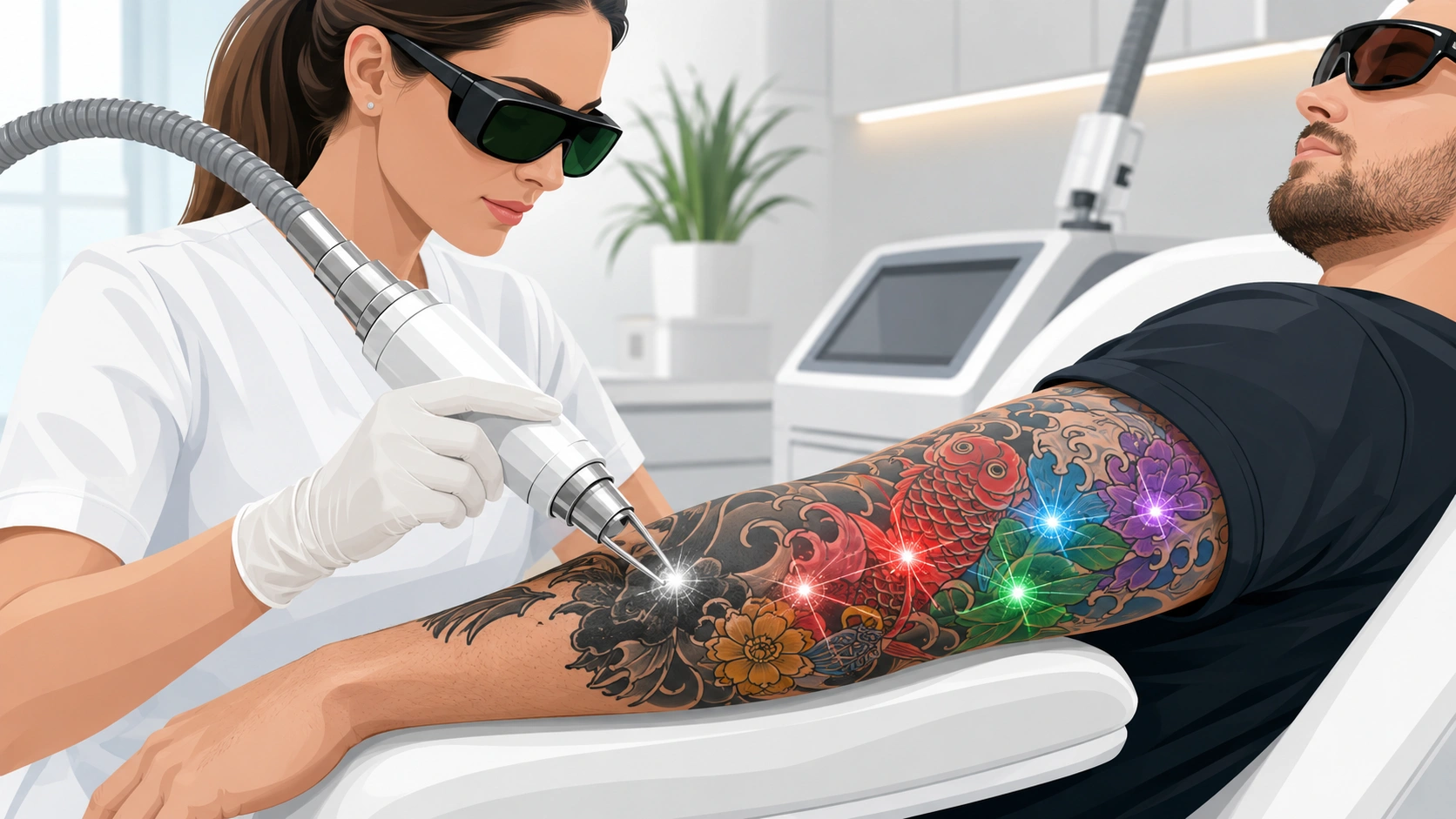
Laser tattoo removal gets discussed constantly and understood rarely. Around one in four tattooed adults has thought about removing at least one piece, yet most of what circulates online is secondhand: ruined skin, unbearable pain, colors that supposedly never come out no matter what. The actual process is a physics problem. Specific wavelengths of light hit specific pigment particles for a fraction of a second, and everything else follows from how well that match is made.
Understanding the technology makes the rest of it easier to judge, including which claims are outdated and which clinics are worth booking with.
How the technology actually works
A tattoo sits in the dermis, below the layer of skin that sheds and renews. The immune system cannot clear the ink because the pigment particles are physically too large for immune cells to carry away. That is the whole reason tattoos are permanent.
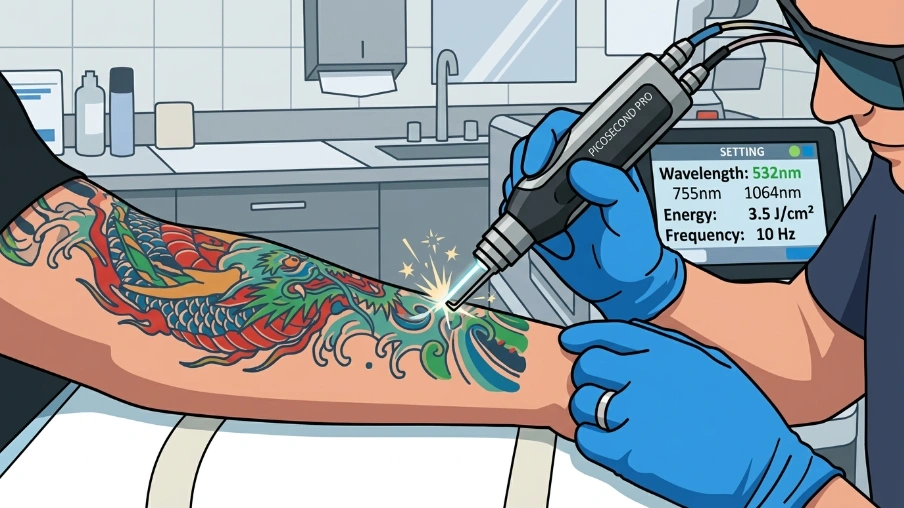
Laser devices solve this by shattering the particles rather than burning them out. A Q-switched laser fires pulses measured in nanoseconds. Picosecond systems, the newer generation, fire pulses roughly a thousand times shorter. The shorter the pulse, the more the energy behaves as a pressure wave instead of heat, which fractures pigment mechanically while leaving surrounding tissue largely alone. The fragments are then small enough for the lymphatic system to clear over the following weeks.
That timing difference is why the technology has improved so much in the last decade, and why results from older equipment are a poor guide to what is possible now.
Myth 1: Removal destroys the skin around the ink
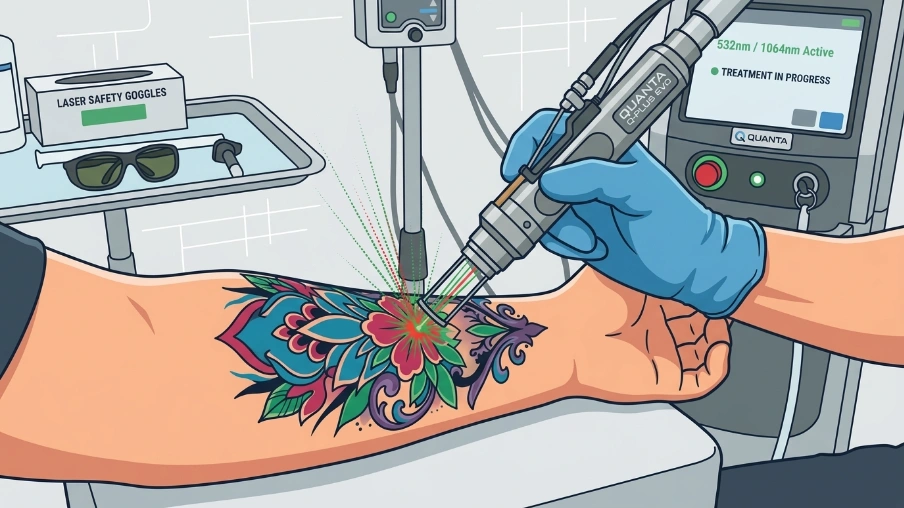
This one stops people before they ever book a consultation. Selective photothermolysis, the principle these devices are built on, means the laser energy is preferentially absorbed by the pigment rather than by the tissue holding it. Redness, swelling, and occasional blistering in the days after a session are expected and behave much like a sunburn.
Scarring is uncommon when the settings match the skin type and aftercare is followed. The people who do end up with texture changes or pigment loss are usually those who tried removal creams, home devices, or a provider running outdated equipment at settings chosen by guesswork.
Myth 2: One session removes a tattoo
Nothing about this process is a single appointment. Most tattoos need somewhere between six and twelve sessions, spaced six to eight weeks apart, and that spacing is not padding. The gap exists because the lymphatic system needs time to clear the fragmented pigment before the next pass has anything useful to break down.
Ink density, layering, age of the tattoo, and placement all shift the number. Tattoos on the lower legs and feet tend to clear more slowly than those on the chest or upper back, largely because circulation is weaker further from the heart. A consultation with a test patch gives a far more realistic timeline than comparing notes with a friend who had a different tattoo in a different place.
Myth 3: The pain is far worse than getting tattooed
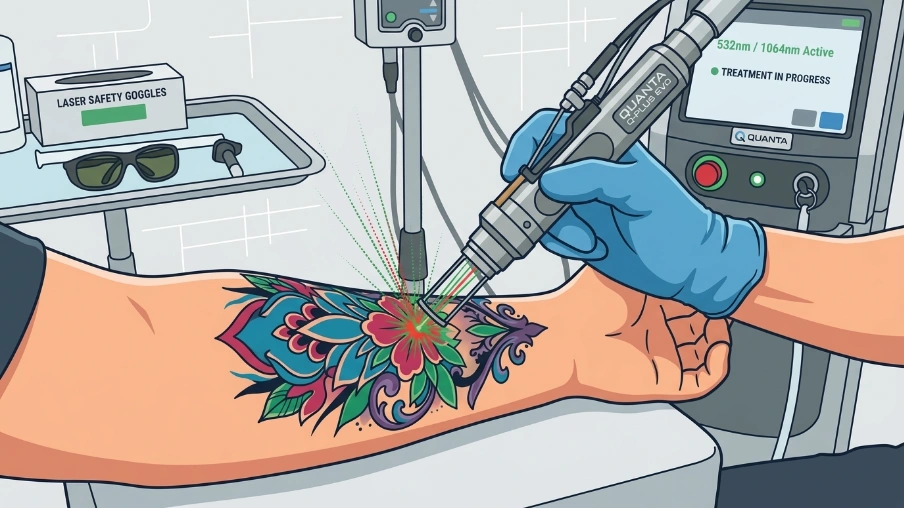
Most people rate laser sessions as similar to being tattooed, sometimes slightly sharper, but not in a different category. The common description is a rubber band snapping repeatedly against the same spot. Sessions are also short. A small design can be finished in a couple of minutes, compared with hours in a tattoo chair.
Topical numbing and forced cold air devices are standard at properly equipped clinics and make a real difference. Anyone who knows they are sensitive should say so at the consultation so the provider can plan around it rather than improvise mid session.
Myth 4: Every ink color reacts to the laser the same way
This is where the technology detail matters most. Pigments absorb light selectively, so a wavelength that destroys one color passes straight through another.
Black and dark blue absorb broadly and respond fastest, which is why a 1064 nm wavelength is the workhorse of most removal plans. Red pigment absorbs well around 532 nm. Greens are targeted with longer red wavelengths near 694 nm or 755 nm, and stubborn light blues sit in a similar range. Yellow and white are the hardest cases. Yellow absorbs poorly at every commonly available wavelength, and white pigment often contains titanium dioxide, which can darken rather than fade when hit with laser energy.
This is why a multicolored piece frequently needs more than one device, or a single platform with switchable wavelengths. A pastel sleeve and a plain black script tattoo are not comparable jobs, and anyone quoting the same plan for both is not accounting for the ink.
Myth 5: Removal is only for people who regret the tattoo
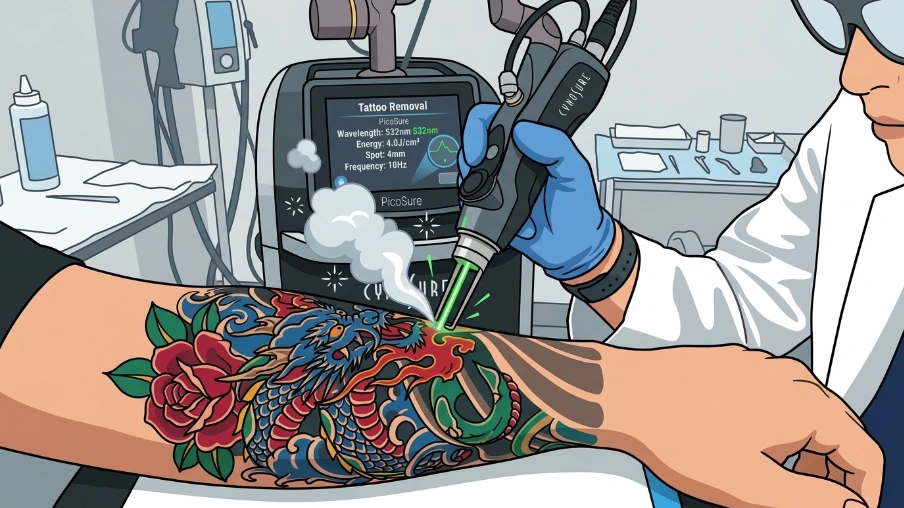
Plenty of clients are not aiming for bare skin. Partial fading is routine preparation for a cover up, because lightening the existing ink by half gives the next artist far more room on color and design instead of forcing a dense black solution.
Removal is also used to fix blown out linework, lighten amateur or stick and poke pieces, and clean up tattoos that have blurred with age. Providers regularly build treatment plans that stop at fifty or sixty percent clearance, which is a different sequence of settings and session counts than a full removal. Saying which outcome you want at the consultation changes the plan from the first appointment.
Myth 6: Any clinic with a laser can do the job safely
Buying a device is not the same as knowing how to operate one. Safe treatment means matching wavelength to ink color, adjusting fluence to skin type, recognizing when a pigment is at risk of darkening, and tracking healing between sessions. Getting that wrong produces uneven clearing, ghosting, or lasting texture changes.
Ten minutes of checking beforehand is worth it. Ask what devices the clinic runs and which wavelengths they cover, ask who operates them, and ask to see results on skin and ink similar to yours. For anyone in the Philadelphia area, the tattoo removal experts in Newtown are a reasonable benchmark for what a properly equipped practice looks like, including consultations that set an honest timeline instead of promising a clean slate in three visits.
Myth 7: Removal always costs more than the tattoo did
Pricing tracks size, color range, and session count, so the comparison depends entirely on the piece. A large multicolored back tattoo carried across a full plan can absolutely exceed what the artist charged. A small black wrist tattoo usually does not come close.
Most clinics price per session, and package pricing brings the per visit figure down meaningfully. What matters more than the headline number is what happens if the tattoo needs sessions beyond the original estimate. Reputable providers put that in writing at the start rather than leaving a range that quietly expands once treatment is underway.
The takeaway
Laser removal is not instant, not free, and not identical for any two tattoos. It is also not the gamble that decade old stories make it sound like. The outcome tracks the technology being used, the wavelengths available for the specific colors in the skin, and whether the person operating the device is choosing settings deliberately. Pick the provider on that basis and the rest of the process becomes predictable.
Medical disclaimer: This article is for general information only and is not medical advice. Laser tattoo removal is a medical procedure with individual risks. Consult a licensed dermatologist or qualified medical provider about your own skin, medical history, and tattoo before starting treatment.
References
- U.S. Food and Drug Administration, Tattoos and Permanent Makeup: Fact Sheet
- American Academy of Dermatology Association, guidance on laser tattoo removal
- American Society for Dermatologic Surgery, patient resources on tattoo removal